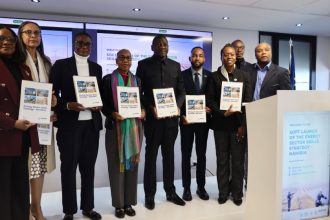
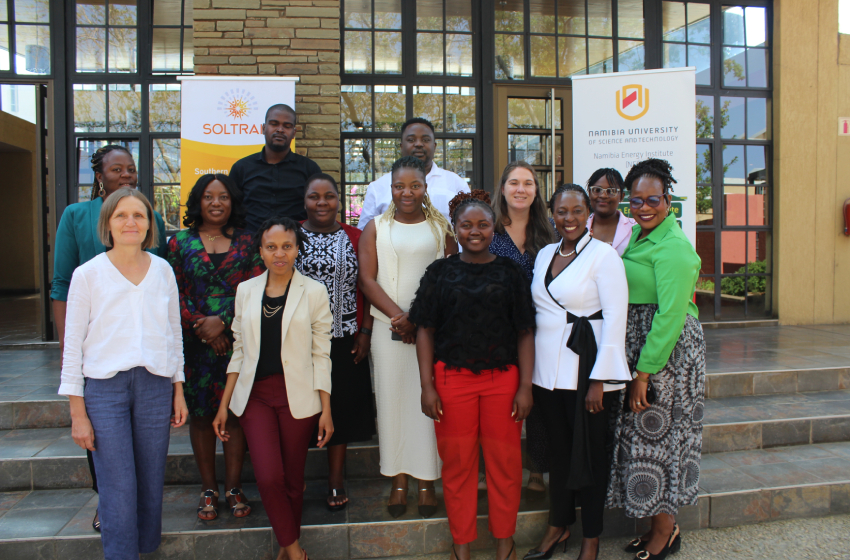
The SOLTRAIN+ & IEA SHC Task 69 Joint Symposium hosted by the Namibia Energy Institute (NEI) at the Namibia University of Science and Technology (NUST) dedicated a full day to a workshop on gender mainstreaming in the solar thermal industry. This workshop brought renewed attention on the need for gender-balanced participation in the renewable heating and cooling (RHC) sector and to the importance of creating inclusive environments where both women and men can contribute meaningfully to providing sustainable solutions to pressing energy challenges.
On 24 September 2025, a total of 38 participants, which comprised 16 women and 22 men, took part in the transformative gender mainstreaming workshop under the SOLTRAIN+ initiative. The session explored the critical distinction between gender equality and gender equity, deepening the understanding of inclusion in the renewable energy sector.
Gender equity ensures fair treatment by addressing different needs, paving the way for gender equality—equal rights and opportunities for all. Gender parity tracks representation across genders but doesn’t guarantee fairness or inclusion.
Women have long been excluded from many professional spaces, and some male-dominated sectors still resist change. SOLTRAIN+ works to open up these spaces in the RHC sector and build inclusive, responsive workstreams that meet diverse individual needs, including those with special requirements.
Edith Makandi, a Gender Equality, Diversity, and Social Inclusion Specialist with over 20 years of experience on gender advocacy, delivered an insightful session on the connection between gender equality, women’s empowerment, sustainable energy, and climate change. Her presentation highlighted the importance of integrating women into technical roles within the renewable energy sector, particularly in renewable heating and cooling (RHC). Through practical examples and case studies, Edith demonstrated how women’s leadership and technical participation can shape energy access and climate solutions.
Makandi further emphasised the importance of ensuring equal rights and access to resources, citing the Barefoot College’s “Solar Mamas,” which trained over 65 women in solar engineering. Her passion-filled presentations underscored that women’s empowerment is a driver of change, fostering entrepreneurship in clean energy and enhancing community resilience.
Gender-responsive sustainability frameworks, such as those promoted by UN Women, require inclusive participation and funding for women-led initiatives.
“Women are primary energy users but remain underrepresented in technical roles, limiting innovation and equitable access,” Makandi noted.
Currently, women account for only 32% of the renewable energy workforce. Thus, integrating women into the renewable energy (RE) sector enhances design, benefits, and climate resilience of RE systems and technologies—making gender equality and women’s empowerment crucial for sustainable energy and climate change solutions.
Neo Mapapanyane, a Professional Engineer from Eskom of South Africa, also presented at the workshop and introduced how women in the SOLTRAIN+ project can join the CIGRE organisation, of which she is the chair in South Africa, which has a component of Women in Energy. She highlighted that there are real opportunities for women to develop their careers, self-confidence, and professional skills.
The interactive workshop sparked lively discussions and participation by nearly equal numbers of women and men, underscoring the relevance and urgency of gender mainstreaming in the energy sector.
Other workshop subjects focused on Incorporating Gender Perspectives into the Design and Development of Projects Focused on Renewable Energy, Incorporating Gender Perspectives into the SOLTRAIN+ Project and Future Developments, and Effective Practices and Case Insights from SOLTRAIN+ Gender Managers on Activities, Achievements, and Experiences in their Respective Countries.
Emphasis was placed on the critical role of gender mainstreaming for project effectiveness and sustainability, practical methodologies like gender analysis frameworks and gender-responsive project cycle checklists and addressing key barriers to women’s involvement in RHC. This includes lack of awareness, mentoring, training, and targets, alongside significant financial, socio-cultural, and institutional obstacles.
Hendrina Shinime, the SOLTRAIN+ Gender Manager at the NEI, detailed the Institute’s initiatives aimed at fostering gender diversity, women’s empowerment, and inclusivity across its RHC activities.
Shinime indicated the NEI has been integrating gender diversity in all its projects implementation, among others. She explained that the NEI integrates gender considerations into its project’s implementation stages, including capacity-building programs such as practical training programs on solar thermal systems installation.
She further highlighted a case of Penduka Namibia, a community project empowering women in Windhoek, which faced an energy challenge due to high electricity costs. An energy audit at the facility, led by the NEI, revealed old electrical appliances and inadequate maintenance as primary issues, leading to recommendations for energy-efficient upgrades.
These efforts highlight the NEI’s dedication to empowering women and advancing sustainable energy solutions in Namibia as a national think-tank of Namibia’s energy sector.
The workshop on gender mainstreaming served as a transformative platform where both women and men engaged in a candid, objective discussion on how and why gender mainstreaming is not only a sine qua non but also a moral imperative as we advance our efforts towards realising a carbon-neutral economy for Namibia, Africa, and the world at large.