Africa stands at a crossroads – facing stark realities of climate volatility, persistent energy poverty, and accelerating demographic change, but also at a rare moment of possibility.
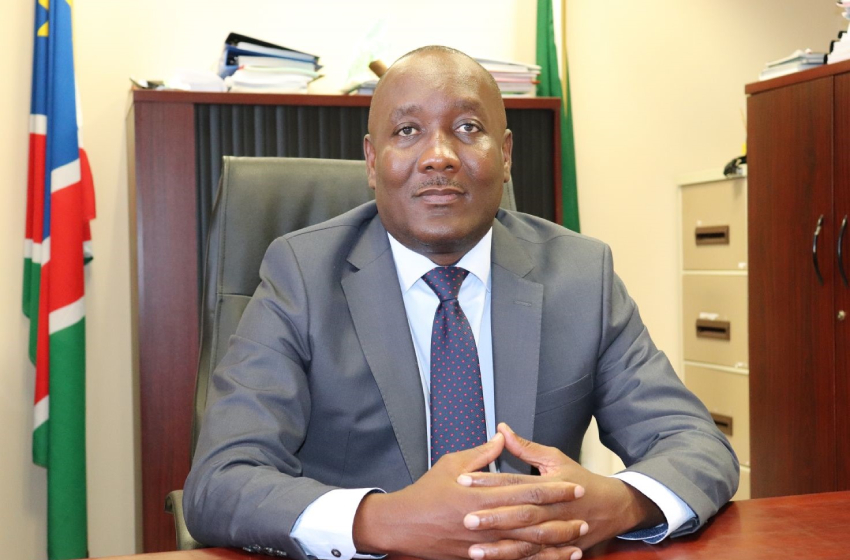
Namibia’s Environmental Commissioner, Timoteus Mufeti, speaking at the 3rd International Conference on Circular Economy, Renewable Energies and Green Hydrogen in Africa (ICERA 2025) held in Windhoek at the end of October, said while responsible for only less than 4% of global greenhouse gas emissions, Africa faces disproportionate impacts of climate change: drought, floods, food and energy insecurity, and increasing youth unemployment.
“Nearly half of Sub-Saharan Africa’s population (of about 570 million people) still lacks access to electricity. Only 18% have access to modern fuels for cooking; many of whom endure daily hardships and health risks from traditional biomass use. At the same time, our continent finds itself at the centre of a global energy transition. We hold 35% of the world’s critical minerals for clean energy technologies and boast 60% of its best solar resources. Yet, we host less than 2% of current global renewable energy capacity,” said Mufeti.
The Environmental Commissioner said this structural paradox of abundance amid deprivation, demands a whole system rethink and coordinated action.
“If we remain on a business-as-usual trajectory, Africa’s emissions and resource pressures will rise rapidly as our economies and cities continue to grow,” said Mufeti.
He highlighted that the answers to these challenges lie in three interlinked pathways, namely advancing a circular economy, scaling renewable energy and unlocking green hydrogen and new economic frontiers.
Advancing Circular Economy
Africa’s future must break the old extractive, linear model of “take, make, dispose”. Over 62% of African countries rely on natural resource extraction for their gross domestic product. Yet, 85% of the continent’s workforce operates in the informal sector-often leading and sustaining recycling, repair, and reuse activities.
“More than 125 million micro and small enterprises drive grassroots innovation in waste valorisation, e-waste processing, and low-carbon manufacturing. Circular economy strategies, rooted in our local realities, offer a path to reduce vulnerability and dependency, create jobs, expand green sector diversification, and keep the value of resources within Africa,” said Mufeti.
The African Circular Economy Alliance now coordinates these efforts, harmonising national and continental strategies and sharing proven models such as eco-industrial parks, plastic EPR schemes, and inclusive waste-to-energy initiatives.
Scaling Renewable Energy
Africa holds immense untapped renewable power: vast sun, strong winds, perennial rivers, and deep geothermal resources. Recent investments have surged by over 80% in five years, led by South Africa (10.6 GW capacity), Morocco (over 50% renewables in its mix), Kenya (nearly 1 GW of geothermal), Egypt (11.8 GW renewables), and others.
Mufeti said ambitious initiatives-like the African Renewable Energy Initiative (AREI), aiming for 300 GW of new renewables by 2030-and landmark projects such as Morocco’s Noor Ouarzazate Solar Complex and Egypt’s Benban Solar Park, exemplify Africa’s pragmatism and ambition.
“Yet, most of our population remains unconnected, and investment flows need to triple to deliver universal access and drive down emissions,” he said.
Unlocking Green Hydrogen
Namibia has showcased Africa’s first Net Zero village at the Daures Green Hydrogen Village. This pilot, and the larger GW-scale projects planned, use the country’s abundant solar and wind resources to produce green hydrogen and ammonia-fuels that will drive African industry, create local jobs, produce carbon-neutral fertiliser, and catalyse new export markets.
Mufeti said Daures is not just about green technology, but about sustainable livelihoods, community partnership, and local value creation-demonstrating how Africa can lead the world in clean hydrogen production.
The Environmental Commissioner, however, lamented the fact that financing for green projects, especially for smaller economies, remains a significant challenge.
“Transmission and energy access are hampered by outdated infrastructure. Weak regulatory and institutional frameworks slow the shift from fossil fuel dependency. Data gaps, limited skills, and the exclusion of informal sector innovators often stall large-scale progress,” said Mufeti.