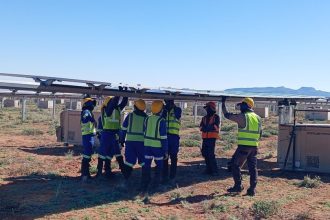

Solarcentury Africa’s 19.3 megawatt peak (MWp) Gerus Solar One plant, situated between Otjiwarongo and Outjo, is now operational, becoming Namibia’s first merchant solar facility to sell electricity directly into the Southern African Power Pool (SAPP).
The Gerus plant is only the second purpose-built merchant solar project in Africa to participate in the SAPP. The first was Solarcentury Africa’s 25 MWp Mailo solar plant in Zambia, which achieved commercial operation in July 2025.
British High Commissioner to Namibia, Neil Bradley, officially inaugurated the Gerus Solar One plant on 6 February. The project is seen as a transformative renewable energy initiative that contributes to Namibia’s energy sustainability while supporting long-term economic development through power exports to the Southern African Development Community (SADC) region.
The Gerus solar plant is backed by roughly N$335 million (US$20 million) in international funding, representing a significant UK investment in Namibian clean energy. It was developed in partnership with Namibian companies Sino Energy and Alensy Energy Solutions and was delivered within a 12-month timeline.
By selling power directly into the SAPP, the solar plant enhances regional energy security and demonstrates the viability of merchant solar power models in Africa.
The inauguration ceremony was also witnessed by Kunene Regional Governor Vipuakuje Muharukua and Electricity Control Board of Namibia Chief Executive Officer Robert Kahimise.
Bottom of Form
Solarcentury Africa’s Chief Executive Officer, Jason de Carteret, said the commissioning of the Gerus plant highlights the impact of strong local partnerships and technical expertise in accelerating access to clean, reliable, and affordable energy across Southern Africa.
The plant is expected to generate around 50.8 GWh of clean electricity annually, enough to supply power to more than 14,000 Namibian homes, while reducing carbon dioxide emissions by approximately 17,000 tonnes per year.
The merchant model reduces dependency on traditional PPAs, allowing investors to diversify revenue streams and mitigate risks associated with state consumers.
In the Southern Africa region, hydropower and coal traditionally dominate the energy mix, but environmental challenges, such as recurring droughts, complicate hydropower production. Additionally, the pressure to reduce carbon emissions to meet international commitments places added strain on governments to diversify their energy sources and limit coal usage, a polluting energy source.
The Gerus One Solar plant is thus positioned to fill these energy supply gaps. The Namibian solar installation will offer a stable energy source unaffected by the climatic challenges impacting hydropower, while aligning with the environmental commitments made by the countries in the region.
In Namibia, this fully merchant model opens avenues for other similar projects in the renewable energy sector. The economic implications are significant, not only in terms of local job creation but also in attracting new investors to a market where state support is often crucial.