The Southern African Development Community (SADC) has acknowledged persistent challenges in availability, accessibility and affordability of energy, especially in rural areas, and fragmented policy environments that constrain cross‑border trade.
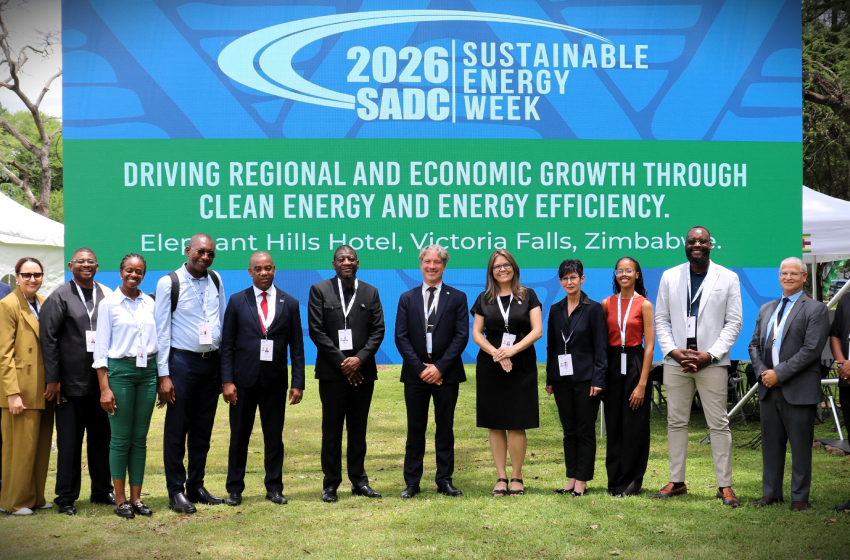
During the 2026 SADC Sustainable Energy Week (SEW), held from 23–27 February in Victoria Falls, Zimbabwe, the regional body undertook to set out a comprehensive action agenda to increase access to energy.
The SADC SEW attracted more than 800 participants, including regional energy ministers, regulators, development finance institutions, private sector leaders, technical experts and civil society, under the theme “Driving Regional Economic Growth through Clean Energy and Energy Efficiency.” The gathering underscored its significance as a major platform for dialogue, networking and knowledge exchange in the sustainable energy sector. Participants were drawn from a diverse range of countries across Africa, Europe, Asia and North America, reflecting both strong regional ownership and growing international interest in sustainable energy cooperation.
DECISIVE ACTION
Zimbabwe’s Vice President General (Rtd) Constantino Chiwenga, who officially opened the 2026 SADC SEW, urged SADC to move decisively from discussion to implementation and to leverage its abundant resources to shift from energy deficit to surplus.
Regional priorities identified include fast‑tracking key interconnectors, accelerating universal access by 2030 via grid and off‑grid solutions, harmonising policies and regulations to attract private investment across the value chain, scaling solar thermal, advancing energy efficiency standards and productive use of energy, and leveraging critical minerals, green hydrogen and emerging technologies to drive a just, diversified energy transition.
The SADC SEW stressed that commitments made by member states during the summit need to be converted into time‑bound, trackable actions, supported by strong regional cooperation, private‑sector engagement and community‑level impact.
SADC member states have also been urged to increase their national budget allocations towards energy and strengthen the roles for regional implementing agencies.
The summit renewed a sense of urgency and optimism about the region’s clean energy transition, emphasising the importance of partnerships and commitments to accelerate investment, strengthen regional power cooperation and expand access to sustainable energy.
POLICY SYNERGIES
Ministerial high‑level policy deliberations examined how to drive policy synergies for a sustainable energy transition, framed by SADC’s Regional Indicative Strategic Development Plan and Regional Infrastructure Development Master Plan.
Ministers and heads of delegations from across the region discussed targets for electricity access, renewable integration, transmission expansion, gas corridors, local manufacturing of clean‑energy components and the development of regional regulatory authorities.
The host of the 2026 SADC SEW, Zimbabwe’s Minister of Energy and Power Development, July G. Moyo, stressed the importance of clean energy and energy efficiency as catalysts for economic growth, while calling for deeper regional integration, stronger public–private collaboration and harmonised legislation.
The 9th Southern African Solar Thermal Training & Demonstration Initiative (SOLTRAIN) Conference, held during the SADC SEW, showcased Southern Africa’s progress in solar thermal technologies, from policy and standards to demonstration projects and vocational training.
Subsequent sessions examined pathways to sustainable heating and cooling innovations, gender diversity management and youth inclusion, highlighting the need for harmonised standards, installer certification and targeted capacity building so that solar thermal can play a larger role in the energy transition.
CLEAN COOKING
Parallel sessions on clean cooking, convened by the Global Network of Regional Sustainable Energy Centres (GN-SEC), positioned clean cooking as a core pillar of universal access, stressing integrated policy frameworks, blended finance and gender‑responsive approaches.
The SADC SEW also examined regional policy frameworks for energy security and on redefining power sovereignty in a high‑renewables future, underscoring that regional power trade, strong institutions and grid investment are now central to energy security and economic development.
Minister Moyo underscored energy efficiency as a strategic priority for development and climate resilience, urging that policy be translated into binding legislation, supported by robust data and institutional capacity.
Per Lindgärde, Ambassador of Sweden, framed efficiency as the “first fuel” and a cornerstone of resilience and economic transformation, stressing that progress should be measured by how efficiently energy is used.
Energy efficiency offers the fastest, lowest‑cost route to lowering emissions, cutting costs and strengthening competitiveness, but requires stronger enforcement of standards, regional testing infrastructure and better access to finance.
Parallel sessions explored infrastructure financing for an energy‑secure region, with development banks, pension funds and commercial financiers discussing blended finance, risk‑mitigation tools and regional project pipelines to crowd in private capital.
ENERGY PRODUCTIVITY
The SADC Centre for Renewable Energy and Energy Efficiency (SACREEE) led discussions on advancing energy efficiency, highlighting continental initiatives to boost energy productivity and called for prioritising efficiency investments before new generation.
The SADC SEW also focused on the productive use of energy in agriculture and rural economies, demonstrating how agrivoltaics, solar mini‑grids and off‑grid solutions can power irrigation, agro‑processing and rural enterprises, thereby creating jobs and strengthening resilience.
The gender and youth track, led by Global Women’s Network for the Energy Transition (GWNET) and SACREEE, emphasised mentorship, standardised skills, targeted financing and stronger representation of women and youth in technical and leadership roles, including the launch of the “African Power Girls Rising” campaign.
SADC Executive Secretary, Elias M. Magosi, in his presentation on the regional energy status said most member states had completed their national energy compacts, rising electricity access to about 56% and advancing regional masterplans and interconnectors, alongside persistent challenges such as a coal and hydro‑dominated mix, financing gaps and power shortages.
Magosi said energy is about people and livelihoods, calling for diversified, resilient and integrated systems.
With the SADC SEW platform continuing to gain traction as a catalyst for policy dialogue and innovation, the baton was passed to the Kingdom of Eswatini, which will host the 2027 edition and build on the momentum generated in Zimbabwe.