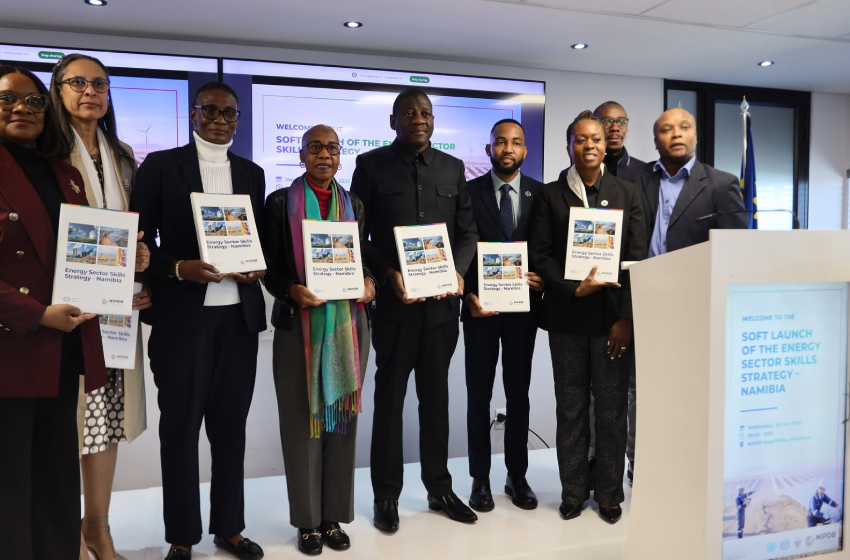
The Namibia Investment Promotion and Development Board (NIPDB), in collaboration with the International Labour Organization (ILO), has launched the Energy Sector Skills Strategy Report for Namibia.
The robust and data-driven roadmap is a result of various workshops and analytical reviews held in the country. Employing the ILO’s Skills for Trade and Economic Diversification (STED) methodology, the strategy systematically identifies and addresses skills gaps, ensuring that Namibia’s workforce is prepared for the opportunities ahead and that the sector’s growth translates into decent employment and a just transition for all Namibians.
Namibia is at a critical juncture, with its burgeoning energy sector poised to be a primary driver of sustainable economic growth, industrial diversification, and significant job creation.
A strategic approach to human capital development is paramount to capitalise on the vast potential of Namibia’s renewable resources—including biomass, green hydrogen, solar, and wind—and recent offshore oil and gas discoveries.
NIPDB says the skills strategy stands ready to bridge the skills gap in Namibia’s expanding energy sector chains, turning potential economic growth into decent, sustainable employment for all Namibians.
The skills strategy identifies the gaps that Namibia must close to better align education and training with industry demand and prepare local workers and businesses for emerging energy value chains.
At the launch, a clear message emerged: the true measure of success will not be the volume of investment attracted or the scale of projects announced, but whether these opportunities improve the lives of Namibians.
Namibia needs skilled engineers and technicians, but also pathways for young people entering the labour market, women pursuing careers in science and technology, and local enterprises seeking to participate in energy value chains.
A just transition must ensure that Namibians do not simply observe the country’s transformation. They must be equipped to shape it, lead it and benefit from it.
The launch now shifts the focus from strategy to action—turning identified skills gaps into coordinated investment, stronger institutions and pathways to decent work.