
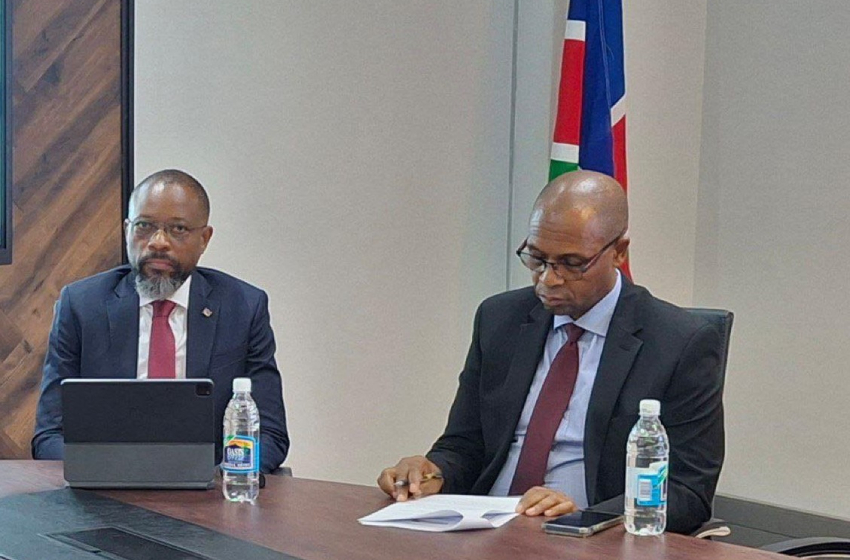
Deepening regional integration, championing the just energy transition and building institutional capacity, will be the key focus areas for the new Chairperson of the Regional Energy Regulators Association of Southern Africa (RERA).
Dr. Paulo António da Graça, Executive Chairman & Chief Executive Officer of the Energy Regulatory Authority (ARENE) of Mozambique, succeeds the outgoing RERA Chairperson, Skhumbuzo Tsabedze, CEO of the Eswatini Energy Regulatory Authority (ESERA).
Speaking in Windhoek during the handover ceremony at the beginning of March, Da Graça said RERA has seen progress in the harmonisation of regulatory frameworks and the development of the RERA Strategic Plan 2025-2029.
However, he said although the region was blessed with abundant energy resources—from the hydro potential of the Congo and Zambezi rivers to the solar irradiance of the Kalahari and the gas discoveries in the north and south – it still faced the persistent challenge of energy poverty.
“Millions in our communities still lack access to modern energy. Our industries are sometimes constrained by supply security. The global transition towards decarbonisation adds a layer of complexity, demanding that we leapfrog technologies and reimagine our grids. This is our mandate. RERA exists to bridge the gap between policy ambition and on-the-ground reality. We are the guardians of the market; we ensure that as we build new generation capacity, we build it on principles of fairness, transparency, and sustainability,” said Da Graça.
He said his tenure will focus on “three pillars of action”.
First: Deepening Regional Integration
“We cannot speak of a SADC Power Pool without robust regulatory frameworks. My priority will be to accelerate the implementation of the RERA model rules. We must work to remove regulatory bottlenecks that hinder cross-border trade. Energy must flow across our borders as freely as our people do, ensuring that a power plant in one country can light a home in another,” said the incoming Chairperson.
Second: Championing the Just Energy Transition
Da Graça said while energy transition is inevitable, it must be just. “It must not leave our miners unemployed or make electricity unaffordable for the poor. As regulators, we must innovate. We need to develop regulatory sandboxes that allow for battery storage, mini-grids, and renewable energy to integrate into our national mixes while maintaining grid stability and consumer protection”.
Third: Building Institutional Capacity
Da Graça said RERA is only as strong as its members, therefore, he will push for enhanced peer-to-peer learning and capacity building. “Many of our member authorities face similar challenges; we must create platforms to share solutions. We will engage more deeply with our stakeholders—utilities, IPPs (independent power producers), and consumer bodies—to ensure that regulation is not a barrier, but an enabler”.
He said SADC regulators will need to pool their technical expertise to tackle issues like cybersecurity in the grid and the regulation of emerging technologies like green hydrogen.
Outgoing Chairperson Tsabedze, on his part, cited the finalisation of the RERA Strategic Plan 2025-2029, the appointment of a substantive RERA Executive Director, the establishment of a substantive Information, Communication, Technology Artificial Intelligence Subcommittee (ICTAIS), the development of national grid codes under the SADC Regional Grid Code for the Electricity Supply Industry (ESI) and the Strategy on Illegal Petroleum Products and Cross Border Trade, as some of the highlights of his tenure.
Modernising the Grid
“We have strengthened our regional cooperation, sharing best practices on integrating renewable energy, modernising the grid, and protecting consumers during volatile market shifts. We have built bridges between our diverse regulatory frameworks, proving that while our local contexts may differ, our commitment to fairness, transparency, and innovation is a common thread that binds us,” said the Eswatini Energy Regulatory Authority CEO.
The CEO of the Electricity Control Board of Namibia (ECB), Robert Kahimise, lauded RERA for playing a vital role in promoting regulatory excellence and cooperation in the energy sector across Southern Africa and that Namibia looks forward to working closely with the new leadership to drive regional integration and sustainable energy development.
“The ECB is proud to be part of RERA and contribute to its objectives. We believe regional collaboration is key to addressing energy challenges and unlocking economic growth in our SADC region. As we embark on this new chapter, let’s remember that energy is the spark that ignites progress. Let’s work together to keep the lights on and the momentum going,” said Kahimise.
RERA Executive Director, Francois Robinson, said looking ahead the regional regulator’s work will be guided by its 2025–2029 Strategic Plan, which is anchored on key strategic pillars – fostering regional collaboration for sustainable energy regulation; enhancing regional energy trade; strengthening institutional capacity through specialised training and knowledge transfer; ensuring financial sustainability and diversified funding; strengthening RERA’s brand, thought leadership, and communications; advocating for consumer protection; and supporting an inclusive, low-carbon energy transition that enhances regional resilience.