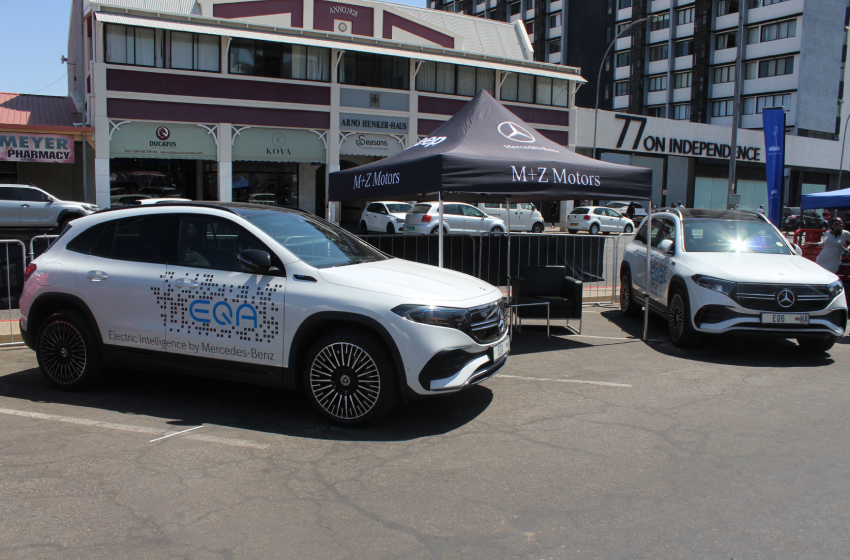
With the rapid increase in the uptake of electric vehicles (EVs) in Namibia, mainly due to the escalating fuel prices, government is now moving to install EV charging stations at strategic locations nationwide.
The roll out of the EV charging network could take advantage of the country’s excellent renewable energy resources.
Namibia’s EV market is still in its infancy, with an estimated 200 vehicles currently on the roads. The country’s updated Nationally Determined Contribution (NDC) aims to replace 10,000 internal combustion vehicles with EVs by 2030, although this target has been dismissed are overly ambitious.
The Ministry of Works and Transport has launched a pilot EV charging station at its headquarters in Windhoek.
Minister of Works and Transport Veikko Nekundi told Parliament that the number of EVs on use in Namibia was increasing particularly in the Windhoek and central regions. This necessitated the need for a countrywide EV charging network.
Nekundi said the pilot charging station at the Ministry was designed and installed by the Ministry’s in-house engineers and will serve as a test centre to inform the possible rollout of EV charging facilities across the country.
He said a future national charging network could support the adoption of electric vehicles within the government’s fleet while also potentially serving the wider public.
The United Nations head office in Windhoek and the City of Windhoek have since installed EV charging stations. A commercial fast-charging station has also been installed at Grove Mall in Windhoek, with one also at Arandis.
Nekundi said the government pilot project forms part of broader efforts to prepare Namibia’s transport sector for the transition to cleaner and more sustainable mobility solutions.
“As custodian of government-invested properties, the ministry is suitably positioned to develop an extensive charging-station network nationwide, with a view to catering for a future electric vehicle government fleet and possibly the public at large,” he said.
Government employees who own electric vehicles and wish to use the charging facility have been urged to register with the Office of the Director of Capital Project Management at the Ministry’s headquarters. Charging will be free of charge during the testing period.
Some Members of Parliament had raised questions about the installation at the Ministry of Works and Transport, seeking clarity on costs, coordination with other ministries and the impact on the national grid.
The City of Windhoek launched its first public electric vehicle charging port during the annual Zero Emissions Week in September last year.
The EV charging port was donated by TESLA Energy Solutions, a company specialising in sustainable energy technologies, and is valued at N$120 000.
The charging station was installed at the City of Windhoek’s head office, making it easily accessible for monitoring usage trends. The installation will also contribute to ongoing research on the integration of electric vehicles into Namibia’s transport system.
The then Windhoek Mayor Ndeshihafela Larandja said this milestone reflected the city’s commitment to climate-resilient development and expanding electric mobility infrastructure.
TESLA’s contribution does not only support the city’s transition to more sustainable energy sources, but also aligns with its commitment to advancing climate resilience and promoting green technologies within the urban environment.
TESLA Energy Solutions CEO Elron Awase said the EV charger donated to the City of Windhoek is a 12V, 32-kilowatt unit, capable of charging different types of vehicles. Depending on the vehicle and charger type, a full charge costs about N$120 and takes between 30 minutes and seven hours.
LEFA co-founder Kalipi Aluvilu said since the start of LEFA’s electrified mobility pilot project in 2024, 11% of the passenger transportation company’s fleet is now made up of EVs. He said it was important for Namibian companies and institutions to invest in EV mobility infrastructure as well as offer incentives that are aimed at promoting EV mobility.
Reaching the 10,000 EV mark is expected to require an additional 17 to 20 GWh of electricity annually (extrapolated from energy targets). Experts note that Namibia’s current grid can comfortably absorb this demand.
Local auto and energy experts have blamed the sluggish uptake of EVs in Namibia on three key hurdles:
- Range: High distance gaps between Namibian towns make long-distance travel difficult.
- Infrastructure: Public fast-charging infrastructure is still in its infancy.
- Price: The high upfront capital cost of electric vehicles remains prohibitive for everyday consumers. High customs duties (15% to 30%) and a 15% VAT further drive up import costs.
Namibia has also established an EV policy with a regulatory framework for electric vehicle charging infrastructure.
The Electricity Control Board (ECB) has approved a framework to govern the installation and operation of EV charging stations, which was endorsed in August 2024.
The framework aims to enhance sustainable transportation and includes guidelines for pricing and resale mechanisms for EV charging stations.