
Namibia recently launched its National Energy Compact, which serves as a strategic framework and formalises the country’s participation in Mission 300, a World Bank Group and African Development Bank-led initiative to expand electricity access to 300 million people across sub-Saharan Africa by 2030.
The Compact was developed through extensive engagements and consultations with various stakeholders, including development partners, private sector, and civil society, to foster partnerships crucial for achieving its ambitious goals.
The framework aligns with Namibia’s Sixth National Development Plan (NDP6), which targets connecting 200,000 households, and the National Integrated Resource Plan (NIRP), which seeks to achieve 80% electricity self-sufficiency and 70% renewable energy penetration.
Government has undertaken to ensure that all citizens have access to reliable, affordable, sustainable, inclusive, and clean energy. The Compact serves as a strategic framework to accelerate progress towards achieving universal energy access by 2040.
Meeting the targets of the Compact is estimated to cost US$1.76 billion (N$27.2 billion), with US$411 million (N$6.5 billion) expected to be mobilised from the private sector. The remaining funding needed is estimated at US$1.05 billion (16.8 billion) out of which US$255 million (N$4.08 billion) is already expected from the private sector through commitments.
HIGHEST TARIFFS
As of 2023, Namibia has made commendable strides, increasing overall electricity access to 59.5%. However, significant challenges remain in achieving universal access. Due to cost-reflective tariffs, Namibia has one of the highest electricity tariffs in Africa, making affordability a crucial barrier to overcome for scaling up electrification efforts.
Government is determined to reach a 70% electrification rate and improve clean cooking access to 61% by 2030. With over 50% of households still dependent on traditional fuels and technologies for cooking, there is a pressing need for advancements in access to clean cooking and electrification solutions.
The Compact unveiled by the Minister of Industries, Mines and Energy, Modestus Amutse, outlines actionable commitments to address these challenges and achieve transformative energy outcomes.
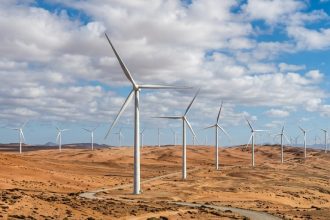
The country is committed to enhancing the share of renewable energy in its generation mix from the current 54% to 70% by 2030. Achieving this goal will require the addition of 454 megawatts (MW) of new installed generation capacity from solar, wind, hydro, and biomass.
The government is mobilising significant public and private sector financing by continuing to create a favorable investment climate, strengthening local stakeholder interactions and capacities through training, and establishing robust data collection systems for informed energy planning and decision-making.
The Compact emphasises regional integration and the vital role of private sector participation in achieving the energy objectives.
STAKEHOLDER CONSULTATIONS
Amutse emphasised that the Compact was prepared following targeted bilateral engagements with key stakeholders across the Namibia energy value chain.
“In particular we engaged our national power utility NamPower because generation, transmission and system stability remain central to Namibia’s energy future. NamPower’s role in long term planning, grid expansion and regional power trade is critical as we seek to strengthen security of supply and reduce our reliance on imports,” he said.
“We also engaged our electricity distributors who are at the frontline of the access agenda. These include the four Regional Electricity Distributors – CENORED, NORED, Erongo RED and SORED, as well as the City of Windhoek and the Oshakati Premier Electric Utility. Each plays a vital role in connecting household’s, schools, clinics and enterprises. Their practical experience informed the Compact’s focus on affordability, rollout, constraints, and implementation realities. We engaged the private sector including through the Renewable Energy Industries Association of Namibia (REIAoN), recognising that private investment innovation and efficiency are indispensable where projects are commercially viable,” said Amutse.
Civil society organisations, especially those focusing on the socio-economic impacts of electrification, including gender inclusion youth employment skills development and community empowerment, were also consulted.
FOCUS ON ACCESS
“This Compact is a Namibian document. It was shaped by Namibian institutions, informed by Namibian realities and aligned to Namibia’s development priorities. It was subjected to rigorous national governance processes. The Compact was reviewed by the Cabinet and by Cabinet Committees, to ensure alignment with our national priorities and our developmental mandate,” the Minister assured.
Amutse said the Compact recognises the full energy value chain and the interdependence between access supply and infrastructure. He said Namibia was focusing on access, because access matters, but was also aware that enhanced access leads to increased demand. And that demand must be met with reliable affordable and secure supply.
“Today, Namibia generates only about 40% of its own electricity. The remainder is imported. As Minister, I am not satisfied with that position. Energy security is economic, security, and we must change this trajectory. This means investing in generation but also addressing transmission bottlenecks. Unlocking transmission is not only good for Namibia, it is good for regional projects such as the Angola-Namibia (ANNA) and ZIZABONA (between Zimbabwe, Zambia, Botswana and Namibia) interconnectors which have the potential to strengthen regional power trade and integrate Southern Africa more effectively,” said Amutse.