
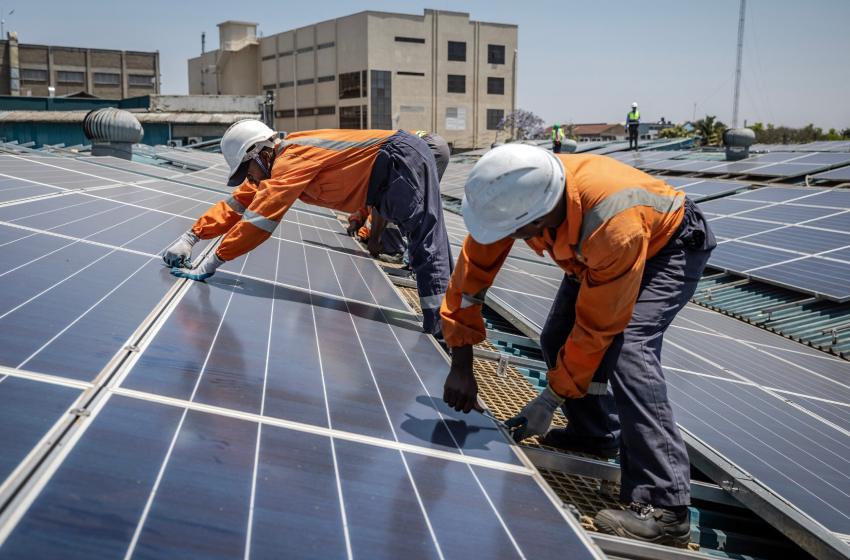
Fifty countries recorded all-time highs in imports of Chinese solar panels in March 2026, whilst 60 others reached their highest levels in six months, according to the latest report from Ember.
Ember is a global energy think tank that aims to accelerate the clean energy transition with data and policy.
Exports to Africa rose by 176% compared to February 2026 to reach 10 GW in March 2026, whilst exports to Asia doubled to reach 39 GW – two new all-time highs.
In Africa, Nigeria (+519%, +1.2 GW compared to February 2026), Kenya (+207%, +1.4 GW) and Ethiopia (+391%, +1.1 GW) all imported more than 1 GW of solar photovoltaic technology for the very first time in a single month, mainly in the form of solar cells.
Elsewhere, records were set in other markets heavily affected by high oil and gas prices, notably in Japan, Australia and the EU. The Middle East was the only region not to see an increase in solar imports, with the closure of the Strait of Hormuz affecting trade flows.
“In addition to the increase in solar installations within their borders, many African countries are moving up the solar value chain by developing their manufacturing and assembly capabilities,” notes Ember.
Chinese exports of cells and wafers have surged and surpassed those of panels in October 2025, with panels increasingly being assembled outside China.
As the effects of high oil and gas prices reverberate across global energy markets, alternatives such as solar power, batteries and electric vehicles will be crucial in helping countries become more resilient and reduce their dependence on fossil fuels, according to Ember.
The think tank reports, based on official data from Chinese customs authorities, record exports of solar products, batteries and electric vehicles in March 2026, up 70% compared to March 2025 and 38% compared to February 2026, in the wake of the conflict between the United States, Israel and Iran.
Chinese battery exports surged in March, as countries sought to store solar electricity generated during the day for use in the evening.
A Shift Towards Clean Electricity
On 21 April, Ember published its report on clean technologies, revealing that these are increasingly reaching a scale capable of cushioning the impacts of global shocks linked to fossil fuels.
Thus, the record growth in solar generation in 2025 was sufficient to replace gas-generated electricity, equivalent to the total LNG exports passing through the Strait of Hormuz last year. The report also shows that the total global fleet of electric vehicles replaced 1.8 million barrels per day of oil demand in 2025, equivalent to 13% of US crude oil production.
The rise of clean electricity reached a new milestone in 2025, with clean energy sources meeting all the growth in global electricity demand, thereby preventing an increase in fossil fuel production. – New African